A low CPI can be a costly distraction. If the users do not activate, subscribe, purchase, or return, the campaign is simply buying volume without building a business. The best paid channels for apps are the ones that can produce downstream value at a predictable cost, with enough scale to matter and enough signal to optimize.
That sounds obvious, but channel selection often starts in the wrong place. Teams ask where competitors are buying or which platform is cheapest this week. A better question is: where can we reach the right user, test creative quickly, and measure the event that defines profitable growth?
The answer differs by app category, monetization model, geography, and creative capacity. Still, a disciplined channel mix usually begins with a few platforms that offer clear intent, mature measurement, and room to scale.
The Best Paid Channels for Apps Start With the Conversion Event
Before allocating budget, define the event that makes an acquired user valuable. For a subscription app, that may be a completed trial with an early retention threshold, not an install. For a marketplace, it may be a first completed transaction. For a mobile game, it may be a payer event or a defined level of engagement that predicts payer behavior.
This decision changes everything. It determines which audiences matter, which creative angles deserve production, and how long the platform needs to learn. Optimizing to installs because purchase data is sparse may be necessary at launch, but it should be a temporary bridge, not the operating model.
A useful channel must do three things: generate enough conversion volume for the algorithm to learn, provide meaningful audience or intent controls, and support creative testing at the pace required to prevent fatigue. The best platform on paper is not the best platform if your team cannot feed it fresh ads and clean conversion signals.
Meta: The Scale Channel for Creative-Led Growth
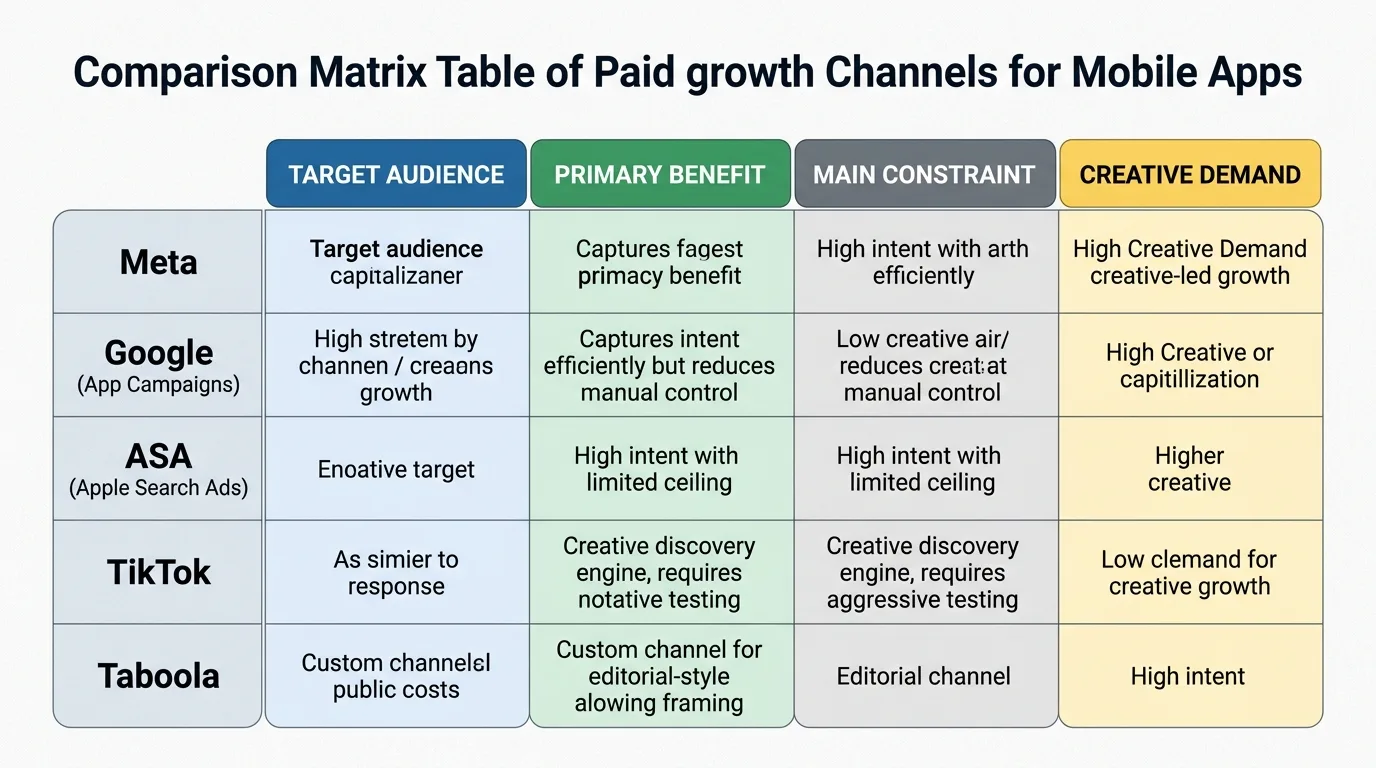
Meta is usually the first serious scale channel for consumer apps because it combines broad reach, mature app optimization, and fast feedback on creative. It works particularly well when the app has a clear emotional benefit, visible product experience, or strong problem-solution story.
The operating advantage is not a complicated campaign structure. It is creative volume and disciplined analysis. A finance app may test anxiety-led hooks around spending control, proof-led ads showing a savings outcome, and demonstration ads that make the onboarding flow feel simple. A wellness app may find that creator-style testimonials outperform polished brand assets. Those insights are often more valuable than another round of audience segmentation.
Meta can also scale quickly, which is its strength and its risk. When a winning concept appears, budget can move fast. If post-install quality is weak, waste can move just as fast. Send back the deepest reliable event available, monitor cohort behavior, and separate creative winners from temporary delivery noise.
For most apps, broad targeting should be the default starting point once conversion volume supports it. Narrow interest stacks can be useful for early research, but they frequently limit delivery and obscure whether the creative itself is doing the work.
Google App Campaigns: Capture Intent and Expand Efficiently
Google App Campaigns are essential when users actively search for the problem your app solves. Utility, finance, travel, productivity, education, and local-service apps often benefit from that intent. Google can also extend beyond Search into YouTube, Discover, and the Display Network, giving the system more inventory to find conversions.
The trade-off is control. App Campaigns automate much of the targeting and placement decisioning, so teams that rely on granular manual optimization can feel blind. The response is not to fight automation. It is to improve its inputs: accurate in-app events, clear value definitions, market-level separation where needed, and a steady flow of asset variations.
Creative still matters here. Video assets influence YouTube and other visual inventory, while text assets help the system understand the offer. Build asset groups around distinct user motivations rather than producing minor edits of one concept. A language-learning app, for example, should test career advancement, travel confidence, habit-building, and immediate lesson utility as separate propositions.
Google is especially valuable alongside Meta because the channels solve different demand problems. Meta creates and captures demand through interruption and persuasion. Google captures users already signaling need. Comparing them only on top-line CPI misses that distinction.
Apple Search Ads: High Intent, Limited Ceiling
For iOS apps, Apple Search Ads deserves early attention. A user searching the App Store for a category term, competitor, or use case is close to a decision. That generally produces strong install-to-trial or install-to-purchase rates, especially for apps with a clear category fit.
Apple Search Ads is not always the largest growth lever. Keyword inventory has a natural ceiling, and aggressive bidding can erode economics quickly. But it is an efficient source of high-intent users, a useful read on App Store demand, and a practical complement to broader paid social campaigns.
Structure matters. Separate brand, category, competitor, and discovery campaigns so performance can be read clearly. Protect brand terms, but do not let them create a false sense of acquisition efficiency. The real opportunity is finding non-brand terms that produce qualified users at an acceptable payback period.
TikTok: A Creative Discovery Engine, Not a Copy-Paste Buy
TikTok can be one of the best acquisition channels for apps with a product that can be understood quickly and a creative team willing to test aggressively. It is particularly effective for consumer subscriptions, gaming, social products, beauty, fitness, and apps with an obvious visual transformation or relatable use case.
The mistake is treating TikTok like Meta with different dimensions. Ads need to feel native to the feed: a direct hook, quick product context, human delivery where appropriate, and enough pacing to earn attention in the first seconds. Highly polished ads can work, but they should not be the default assumption.
TikTok performance can be volatile. That does not make it a poor channel. It means the channel needs a larger creative pipeline, faster iteration, and clear rules for judging performance over a sufficient spend threshold. A single strong ad is not a system. A repeatable process for generating new winners is.
When to Add Taboola and Other Custom Channels
Native platforms such as Taboola can work well for apps that benefit from editorial-style framing, longer consideration, or broad web reach. They are often more relevant for utility apps, content products, health and wellness offers, and subscription funnels that can explain value before sending users to the store or a web-based signup path.
These channels are rarely the first place to start for a new app. They become more useful after the core offer, conversion event, and creative themes are proven on higher-signal platforms. The same applies to influencer amplification, programmatic buying, OEM inventory, and custom placements. Add channels when they solve a specific scaling constraint, not because the media plan needs more logos.
Build a Channel Mix Around Testing Velocity
Channel diversification is valuable, but premature diversification creates operational drag. Every new platform introduces new creative requirements, measurement differences, attribution questions, and optimization rhythms. Spreading a small budget across five channels usually creates five underpowered tests.
A better approach is to establish one scale channel and one intent channel. For many iOS subscription apps, that means Meta plus Apple Search Ads, with Google added as event volume and creative capacity increase. For Android-heavy utility apps, Google may lead, with Meta supplying incremental reach. TikTok becomes a priority when the product and creative have a natural fit.
Then run the same discipline across every platform. Launch concepts in batches. Evaluate results against the deepest actionable event. Identify what message, format, and audience context produced the outcome. Cut losers decisively, refresh winners before fatigue takes hold, and move budget only when cohort quality supports it.
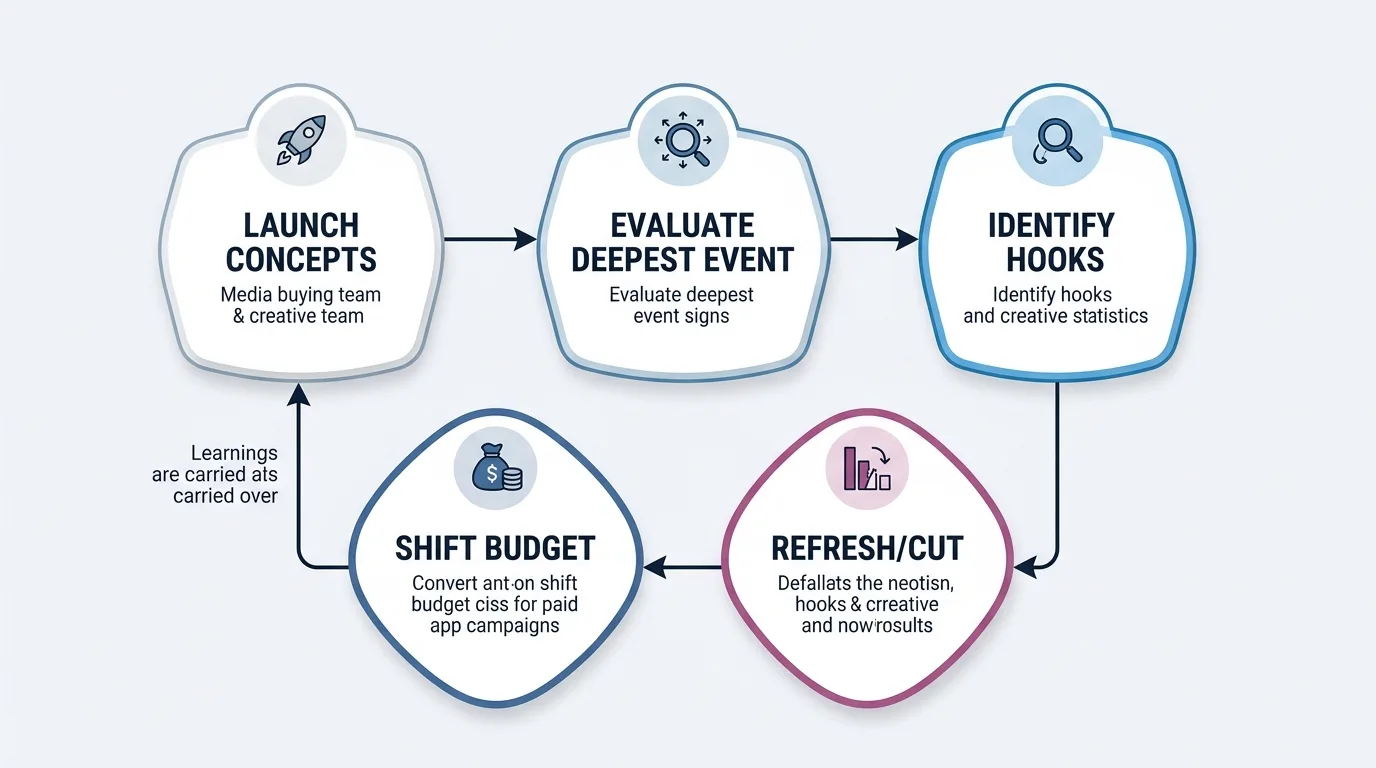
At Conversion Collective, this is treated as one operating system rather than separate creative and media functions. The media buyer needs a steady supply of informed creative tests. The creative team needs direct feedback on which hooks create valuable users, not just cheap clicks. That loop is where efficient scale comes from.
Measure Incrementality Before Declaring a Channel a Winner
Platform reporting is necessary, but it is not the final answer. Attribution windows, view-through credit, and overlapping audiences can make every channel look better than it is. As spend grows, use cohort analysis, geo tests, holdouts, and blended CAC or payback trends to check whether reported performance is translating into business results.
Do not demand perfect incrementality measurement before spending. That can become an excuse for inaction. Start with reliable mobile measurement, consistent event definitions, and a reporting view that connects spend to retention and revenue. Add more rigorous testing as budgets and decision stakes increase.
The right paid channel mix is not fixed. It changes as your app gains brand awareness, your creative improves, your event data matures, and each platform reaches saturation. Keep the standard simple: scale the channels that bring valuable users, produce repeatable learnings, and can absorb more budget without turning profitable growth into expensive activity.