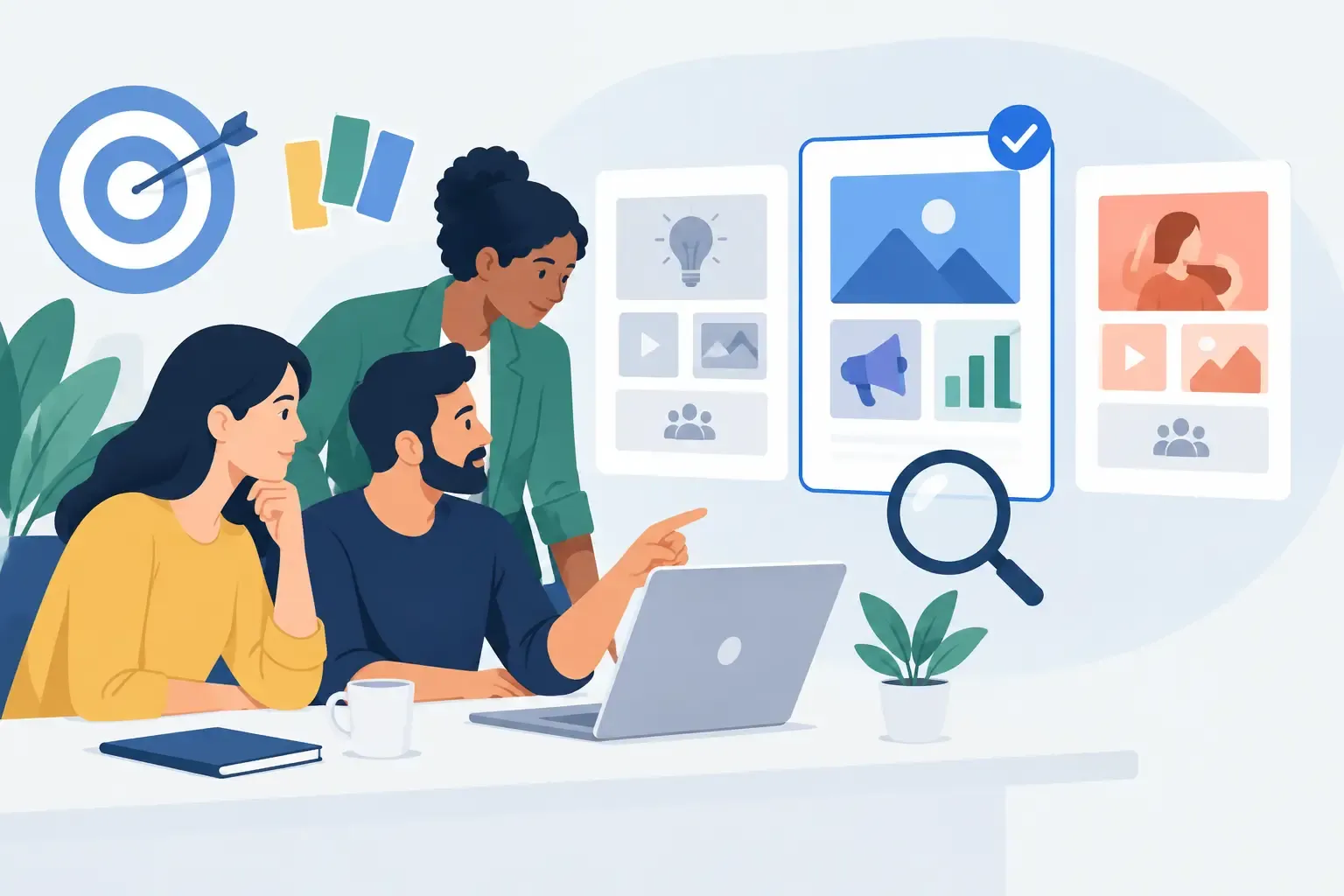
When paid acquisition starts breaking, it usually does not break in one obvious place. Creative slows down. Launches get delayed. Reporting turns into a postmortem instead of a control system. Buyers keep budgets moving, but nobody can say with confidence which variables are driving results. That is exactly where done for you media buying becomes valuable - not as outsourced button-pushing, but as a fully managed operating layer for growth.
For brands spending serious money across Meta, Google, TikTok, Taboola, and other channels, media buying is no longer just campaign setup and bid adjustments. It is a throughput problem. You need testing volume, creative turnover, clean campaign architecture, and fast decision-making. If one part of that system lags, efficiency drops fast. Cost per acquisition rises, signal quality gets weaker, and scale starts to feel expensive.
What done for you media buying actually means
A lot of agencies use the phrase loosely. In practice, done for you media buying should mean one team owns the full execution layer of paid acquisition. That includes planning the testing roadmap, launching campaigns, managing budgets, monitoring pacing, optimizing against performance targets, feeding insights back into creative, and reporting on what is actually working.
The difference matters. If an agency buys media but depends on your internal team for creative strategy, landing page changes, reporting cleanup, and cross-channel coordination, you are still managing the machine yourself. You just have another vendor inside it.
A real done for you model reduces operational drag. The goal is not to create distance from your paid media program. The goal is to give you tighter control through better systems, cleaner execution, and faster iteration.
Why most paid media programs stall
Scaling paid acquisition is rarely blocked by a lack of ideas. More often, it gets blocked by fragmented execution. One team handles creative. Another team runs Meta. Search sits with a freelancer. Reporting comes from a dashboard nobody trusts. By the time insights move from one function to the next, the market has already shifted.
This is why many brands hit a ceiling even with healthy budgets. They are not short on spend. They are short on testing velocity and operational alignment.
Media buying on its own cannot solve that. Creative on its own cannot solve it either. Performance comes from the interaction between the two. Winning ads need to be launched quickly, tested in a structured way, and scaled with discipline. Losing concepts need to be identified early and cut without drama. That requires one system, not a collection of partial services.
Done for you media buying works best when creative and media are integrated
The strongest paid acquisition teams treat creative and media as one performance engine. Media buying generates the signal. Creative responds to that signal. New variations go live fast. Results get interpreted in context, not in isolation.
That feedback loop is where growth happens.
If your buyers are waiting two weeks for new assets, they are optimizing around stale inventory. If your creative team is producing without clear performance inputs, output volume goes up but hit rate stays low. If your reporting does not connect spend, angle, format, audience, and platform behavior, you miss the pattern behind the winner.
Done for you media buying is most effective when it closes those gaps. Instead of asking whether the issue is the audience, the ad, the offer, or the landing page, the team works through a structured test plan that isolates the variable and gets to an answer quickly.
That is also where managed service models outperform advisory relationships. Strategy is useful. Execution speed is what compounds.
What to expect from a serious managed media buying partner
If you are evaluating a provider, look past platform certifications and broad promises. The real question is whether they can run your paid growth engine with consistency under pressure.
A serious team should be able to launch at volume without turning the account into a mess. They should have a clear testing framework, not random experimentation disguised as optimization. They should know how to scale winners without inflating spend just to show activity. And they should report in a way that helps you make decisions, not just review metrics.
That usually includes structured campaign builds, disciplined naming conventions, fast creative trafficking, channel-specific optimization, and a reporting cadence that separates signal from noise. It also means they can tell you when not to scale. More spend is not the goal. Profitable growth is.
The best partners also bring internal systems to the work. Once a program reaches meaningful scale, spreadsheets and ad platform dashboards are not enough. You need centralized workflows, standardized QA, and visibility across large numbers of tests and campaigns. Without that infrastructure, performance starts depending too much on individual heroics.
Where done for you media buying creates the most leverage
This model tends to create the biggest impact for brands already spending enough to feel operational complexity. That includes ecommerce brands trying to increase spend without losing efficiency, lead generation businesses managing aggressive cost targets, subscription brands balancing front-end CAC with downstream value, and app businesses that need constant creative refresh to maintain volume.
It also fits internal teams that know paid media well but do not want to build a large execution layer in-house. Hiring buyers, creative strategists, designers, editors, and analysts is expensive. Managing them well is harder. A done for you partner can compress that operating burden if they bring real process discipline.
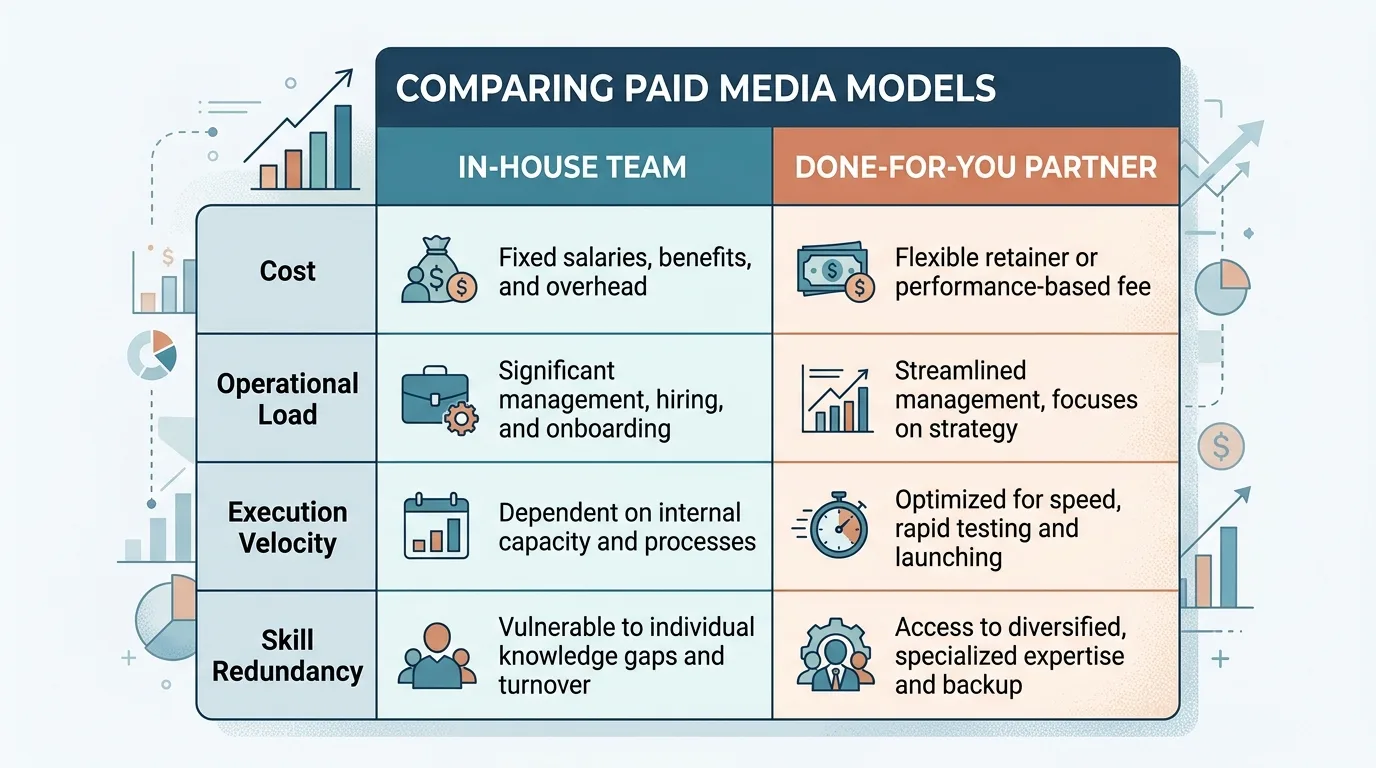
That said, this is not the right fit for every company. If your budgets are still small, your offer is unproven, or your conversion funnel has major issues, handing off media buying will not fix the fundamentals. Paid media amplifies what is already there. If the economics do not work, better execution only gets you to that answer faster.
The trade-off: control versus capacity
Some teams hesitate because they worry outsourced media buying means losing visibility. That concern is fair. Plenty of agencies create a black box, then ask clients to trust the process while spend climbs.
A strong done for you setup should do the opposite. You give up task ownership, not business visibility. The partner handles execution, but you gain cleaner reporting, clearer hypotheses, and a better view of what is driving growth.
There is still a trade-off. You need alignment on goals, decision rights, and communication rhythm. If your team wants to approve every ad, rewrite every test plan, and second-guess every budget shift in real time, speed will suffer. On the other hand, if the partner runs independently with no accountability, mistakes get expensive.
The answer is operational clarity. Who owns what, how decisions get made, what success looks like, and how quickly the team can act without introducing chaos.
How to tell if your current setup is the problem
A few signs usually show up before performance deteriorates fully. Launches take too long. Creative fatigue shows up faster than new concepts. Teams spend more time explaining results than improving them. Cross-platform learnings stay trapped inside each channel. Budgets increase, but confidence does not.
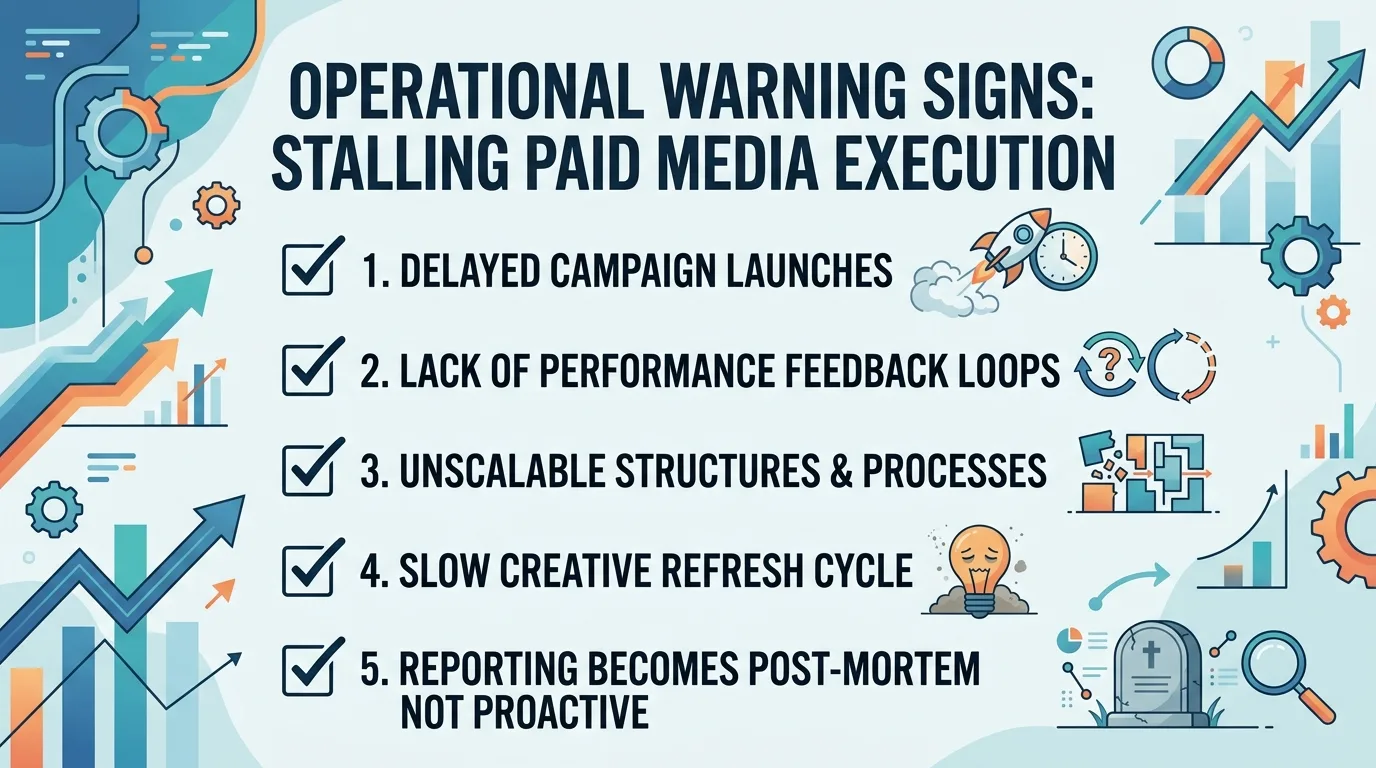
Those are not just workflow annoyances. They are indicators that your paid media system cannot support the next stage of scale.
This is where a provider like Conversion Collective can create leverage, especially for brands that need both media execution and high-velocity creative under one roof. The point is not just to buy impressions more efficiently. It is to build a machine that finds winners faster, cuts waste earlier, and keeps scaling decisions tied to performance.
Choosing the right done for you media buying model
Not every managed service is built the same. Some are media buying shops with limited creative capability. Others are creative shops that can traffic campaigns but lack channel depth. The better model combines both with process infrastructure strong enough to handle volume.
When evaluating options, ask practical questions. How many tests can they launch in a week without breaking process? How do they identify a winner? How do they connect creative insights back to campaign decisions? How do they manage account cleanliness across platforms? How do they prevent wasted spend while still testing aggressively?
If the answers are vague, the execution probably is too.
The right partner should make your paid acquisition program feel more controlled, not more complicated. You should see faster launches, tighter feedback loops, and reporting that points to action. You should also know what the next test is and why it matters.
Done for you media buying is worth it when it removes friction from growth. Not when it adds another layer between your budget and your results.
If your team is spending more time coordinating paid media than compounding it, that is usually the signal. The next level of scale often does not come from spending more. It comes from running the system better.